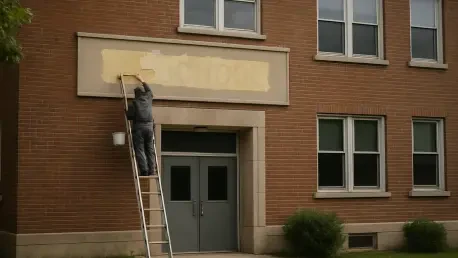

The proposal to rename Conover Road Primary School in honor of Donald Trump has ignited a profound debate within the Colts Neck Township Board of Education, reflecting the deep ideological fissures currently characteristic of the American social landscape. This initiative, formally introduced by board member Robert Scales, seeks to establish a dedicated exploratory committee tasked with investigating the logistical requirements, financial implications, and ethical considerations inherent in such a rebranding effort. Supporters argue that this tribute is particularly timely as the nation prepares to celebrate the 250th anniversary of the Declaration of Independence in July 2026, viewing the move as a patriotic gesture that honors a leader who has prioritized the protection of local educational institutions. The board now faces the complex task of weighing personal political admiration against the traditional norms of school naming conventions, all while navigating a public that is split between enthusiastic endorsement and vocal criticism of the plan.
Local Mandates and Political Ties
Advocates for the name change point to the overwhelming local support for the former president, who secured approximately sixty-nine percent of the vote in the township during the 2024 election. Board members such as Vincent Rugnetta have championed the idea, suggesting that the school’s identity should reflect the values and preferences of the majority of the community’s residents. This sentiment is built on the belief that public buildings should serve as monuments to the figures whom the constituency holds in high regard, thereby strengthening the bond between local government and the citizens it represents. Furthermore, some proponents have suggested a broader historical rebranding of the district’s facilities, including the possibility of renaming the nearby Conover Road Elementary School after Joshua Huddy, a local Revolutionary War hero. This strategy aims to create a cohesive educational campus that celebrates both contemporary political influence and deep-seated local historical significance for the students.
The momentum behind this proposal is further bolstered by the unique personal and professional connections existing between the Board of Education leadership and the Trump Organization itself. Board President Angelique Volpe and her husband, Kevin Walsh—who currently serves as the director of security for the Trump Organization—have played an active role in bridging the gap between the school district and the former president’s inner circle. They have reportedly extended a formal invitation for him to visit the district, an event that would likely draw significant media attention and further cement the township’s status as a stronghold of his political movement. This level of access has led some board members to believe that the renaming could provide the school with national visibility and perhaps even unique opportunities for engagement with high-profile figures. The interplay between private professional roles and public school governance remains a central theme as the board considers the ethical propriety of utilizing these specific personal connections for district-wide decisions.
Community Resistance and Ethical Standards
Conversely, a vocal contingent of residents and former officials has emerged to challenge the proposal, arguing that educational institutions should remain neutral spaces focused on universal human virtues. Critics, including former congressional candidate Matthew Jenkins, contend that school names ought to embody qualities like humility, integrity, and selfless service rather than individual political figures who may be viewed as divisive. The opposition argues that naming a primary school after a modern political leader risks alienating families who do not share the same partisan views, potentially creating an uncomfortable environment for young children during their formative years. There is a deep-seated concern that a school’s identity should transcend current political cycles and instead focus on historical figures whose contributions are universally recognized across the political spectrum. This perspective emphasizes that the primary goal of the district should be to foster a sense of belonging for every student, regardless of their family’s personal political affiliations.
Beyond the philosophical arguments regarding character and virtue, many parents have raised concrete safety and security concerns regarding the potential rebranding of the primary school campus. There is a growing fear that placing such a polarizing name on a building that houses young children could transform the school into a primary target for political protests, vandalism, or even more serious security threats. In an era where campus safety is of paramount importance, these parents argue that the board should avoid any actions that might unnecessarily increase the risk profile of the district’s facilities. The logistical burden of managing frequent demonstrations or heightened security protocols could divert essential resources away from the classroom and disrupt the daily learning environment. For these residents, the potential prestige of the name change does not outweigh the fundamental responsibility of the board to provide a secure and tranquil atmosphere for education. These practical considerations have become a focal point of the public commentary sessions, forcing the board to address the physical well-being of the student body.
Policy Constraints and Strategic Paths
Superintendent MaryJane Garibay has maintained a strictly neutral stance throughout the proceedings, focusing instead on providing the board with historical context and existing administrative guidelines. She clarified that the school’s current namesake, Conover, refers to a local landowner whose estate historically benefited the district, grounding the institution in local heritage. Crucially, a significant hurdle exists in the form of a 2009 district policy which explicitly mandates that facility names must be free from biases, prejudices, or political and religious connotations. This policy was originally designed to ensure that the educational environment remains a sanctuary from the broader cultural wars that often dominate public discourse. Adhering to this established framework would likely preclude the renaming proposal, as any modern political figure inherently carries a set of connotations that could be interpreted as a violation of these standards. The superintendent’s role has been to remind the board that policies are in place to provide long-term stability regardless of the political climate.
The Board of Education ultimately moved to determine whether they would strictly follow the existing 2009 guidelines or initiate a process to revise those standards to allow for the proposed renaming. It was determined that a thorough legal review of the naming policy was necessary to prevent potential litigation from concerned taxpayers who might view the change as an overreach of administrative power. Members of the community were encouraged to participate in upcoming public forums to provide further feedback on how the district should balance local political enthusiasm with the need for institutional neutrality. The board also recognized that any decision made in 2026 would set a significant precedent for how future naming requests are handled within the county. By focusing on a structured, transparent evaluation of the logistical and ethical impacts, the district aimed to reach a resolution that preserved the integrity of the learning environment while acknowledging the diverse viewpoints of its constituents. This careful approach was designed to ensure that the final outcome remained focused on the long-term interests of the children.