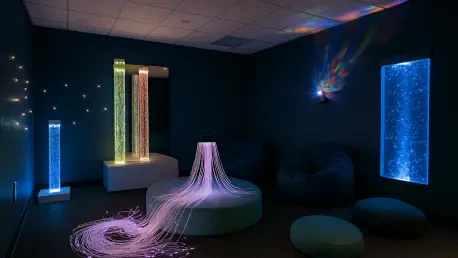

In an educational landscape increasingly aware of student mental and emotional health, Good Shepherd Academy in Kingston, Pennsylvania, has pioneered a transformative initiative by establishing a dedicated sensory room, the first of its kind within the Diocese of Scranton’s Catholic school system. This innovative space was conceived as a direct and compassionate response to the growing levels of stress and anxiety observed in children, particularly in the wake of the global pandemic. Principal Jim Jones identified a pressing need for a sanctuary where students could safely decompress, regulate their emotions, and develop crucial coping mechanisms. The room is designed not as an escape from learning but as a vital tool to facilitate it, providing a calming environment that helps students refocus their minds and re-engage with their academic responsibilities, thereby supporting their holistic development.
A Philanthropic Partnership Fulfills a Crucial Vision
The creation of the sensory room at Good Shepherd Academy was born from a direct observation of the evolving needs of its student body. Principal Jim Jones articulated that after the profound disruptions of the COVID-19 pandemic, many children returned to the classroom with a “heightened sense of anxiety and tension.” This reality fueled his long-held “dream” of establishing a dedicated space where students could find respite and learn to manage their emotional states effectively. The project’s core purpose was to build a sanctuary for decompression, a place where students could proactively address feelings of being overwhelmed before they escalated. The ultimate goal was to equip them with self-regulation skills, enabling them to return to their studies with renewed focus and a greater capacity for learning. This vision reflects a progressive educational philosophy that acknowledges the inextricable link between emotional well-being and academic achievement, positioning mental health support as a foundational element of student success in the modern era.
The ambitious vision for the sensory room was transformed into reality through the crucial financial support of the William G. McGowan Charitable Fund, which fully funded the project’s approximately $50,000 cost for structural and electrical components. The foundation’s commitment was so complete that Principal Jones described the organization as a “blessing” to the school, emphasizing that its backing was the sole reason the project could proceed. He stated unequivocally, “If it was not for the McGowan Foundation, this would not be possible,” highlighting the indispensable nature of their contribution. This successful collaboration serves as a powerful example of how philanthropic partnerships are becoming essential for educational institutions seeking to implement innovative and responsive student support programs. The foundation’s investment not only provided the necessary capital but also validated the school’s forward-thinking approach to student wellness, enabling Good Shepherd Academy to set a new standard for pastoral care within its community.
Designing a Sanctuary for Well-being
Strategically located in a quiet, second-floor area of the school, the sensory room, which officially opened on October 1, was meticulously engineered to provide a multi-sensory experience that promotes calm and regulation. Among its most captivating features is an LED bubble tube, which serves as a gentle visual focal point, and a musical touch wall that offers auditory and tactile feedback in a controlled manner. A standout element is an interactive cube controller; when a student rolls the cube, the room’s ambient lighting seamlessly shifts to match the color that lands face up, empowering the child to influence their environment actively. This focus on interactive technology is complemented by thoughtfully chosen physical comforts. The school partnered with a local vendor to furnish the space with special flexible seating options, ensuring that the room provides not only sensory stimulation but also a physically relaxing and supportive atmosphere conducive to de-escalation and refocusing.
The formal inauguration of the space underscored its significance within the broader diocesan community and affirmed the leadership’s support for innovative wellness initiatives. On November 25, following an all-school Mass, Bishop Joseph C. Bambera of Scranton visited the newly completed sensory room to perform a special blessing, consecrating the area with holy water. His presence lent a solemn and official recognition to the project. Bishop Bambera lauded the initiative, describing the room as both “incredible” and a “calming space” that addressed a growing need in modern education. He extended his gratitude to the McGowan Foundation and all who were involved, noting the increasing prevalence of such facilities in schools and expressing pride that Good Shepherd Academy was a leader in this area for the diocese. This high-level endorsement highlighted the sensory room not just as a school-level project but as a model of forward-thinking pastoral care for the entire Catholic school system.
An Immediate Impact on Student Success
The positive effects of the sensory room were felt almost immediately after its opening, with the space quickly becoming an integral part of the school’s daily routine. Its resources have been in constant demand, with “multiple children in there every day” seeking a quiet moment to regulate and reset. While the room is available to the entire student body on an as-needed basis, it has proven to be an especially powerful tool for students enrolled in the school’s Individualized Instruction (II) program, which supports children with specific learning needs. Mary Siejak, an II teacher specializing in mathematics, reported observing a “measurable difference” in her students’ capacity to engage with their lessons after spending as little as ten minutes in the room. She attributed this marked improvement to the quiet environment and the specialized equipment designed to help students filter out overwhelming stimuli and achieve a genuine state of calm.
This tangible improvement in student focus has profound long-term implications for both personal growth and academic progress. Mary Siejak emphasized that the skills students acquire in the sensory room—such as self-awareness, emotional regulation, and the use of coping strategies—will have “immeasurable effects on both their personal development as well as their academic development.” The room functioned as more than just a temporary retreat; it served as a practical learning environment where children built a toolkit of resilience that they could carry back to the classroom and into their lives. The implementation of this space represented a foundational investment in the school’s broader commitment to educational innovation, complementing its existing STREAM (Science, Technology, Religion, Engineering, Art, and Mathematics) Discovery Room and expanded arts programs. This initiative solidified the school’s belief that addressing the non-academic needs of students was not an ancillary service but an essential prerequisite for achieving academic excellence and fostering well-rounded, healthy individuals.