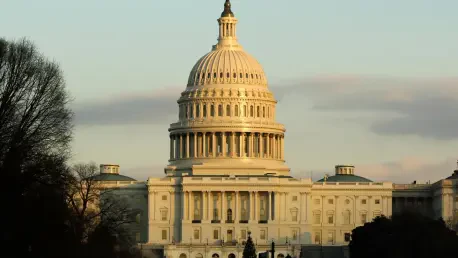

A profound schism over the future of American innovation has pitted the White House against a remarkably bipartisan Senate, creating a high-stakes fiscal battle with the nation’s scientific enterprise hanging in the balance. As the January 30 deadline to pass a budget and avert a government shutdown rapidly approaches, lawmakers are grappling with two vastly different visions for the role of federal research. On one side, the Trump administration has proposed a dramatic and deliberate downsizing of scientific funding, calling for a 21% reduction that would slash budgets at critical agencies by nearly half. In direct opposition, the Senate has advanced its own spending bills that not only reject these cuts but also reinforce a long-standing consensus that robust federal investment in science is essential to national security, economic competitiveness, and public well-being. This legislative showdown is more than a dispute over dollars and cents; it represents a fundamental disagreement about the value and direction of discovery and technological leadership in the 21st century.
A Fundamental Disagreement on Policy
The Administration’s Push for Disruption
The current administration’s fiscal 2026 budget request outlines a clear and intentional strategy to “downsize and disrupt” the nation’s established system of scientific research and development. The White House proposal calls for a total of $155.2 billion for R&D, a figure that represents a staggering 21% decrease from the funding levels of the previous year. This is not a uniform, across-the-board trim but a series of deep, targeted cuts aimed at some of the country’s most vital research institutions. For example, the proposal seeks to reduce the budgets of the National Institutes of Health (NIH) and the National Science Foundation (NSF) by 40% or more. The administration has framed these drastic reductions as an effort to “streamline” funding and eliminate perceived inefficiencies. However, critics argue that such a precipitous drop in investment would cripple long-term research projects, disrupt the pipeline of scientific talent, and surrender American leadership in critical fields ranging from biomedicine to advanced computing, ultimately undermining the very innovation ecosystem that has driven progress for decades.
A Bipartisan Senate Countermeasure
In a striking display of cross-party unity, the U.S. Senate has forcefully rejected the administration’s vision for a diminished federal research role. Lawmakers have advanced a comprehensive spending proposal that allocates $188.3 billion for scientific research, a figure that stands 21.3% higher than the White House’s request and largely shields the scientific community from the proposed deep cuts. This counter-proposal is underpinned by a bipartisan consensus that sustained federal support for research is not a discretionary expense but a strategic imperative for maintaining the nation’s global leadership and economic dynamism. Rather than viewing the existing research infrastructure as bloated or inefficient, these senators see it as a critical engine of innovation. The Senate’s move signals a deep-seated belief within Congress that gutting federal science budgets would be a self-inflicted wound, jeopardizing everything from the development of life-saving medicines to advancements in national security technology. This legislative pushback frames the debate as a choice between short-term austerity and long-term strategic investment.
Examining the Specifics of the Budget Battle
The National Science Foundation in the Crosshairs
The stark contrast between the two competing visions for American science is perhaps best illustrated by the funding proposals for the National Science Foundation (NSF), the primary federal agency supporting non-medical basic research. The White House has requested a budget of just $3.9 billion for the NSF, a figure that is less than half of its 2025 funding level and would represent a historic blow to the agency’s mission. Such a cut would decimate its ability to fund new research grants across a wide spectrum of disciplines, from physics and engineering to social sciences. In direct response, the Senate has put forward a far more robust $8.8 billion budget for the agency. Critically, the Senate’s bill goes beyond simple preservation, explicitly designating funds for strategic areas of national importance. This includes targeted investments in artificial intelligence, quantum information science, and the development of regional innovation hubs, reflecting a legislative priority to not only sustain foundational research but also to accelerate progress in technologies that will define the future economic and geopolitical landscape.
Defending Foundational Medical Research
The National Institutes of Health (NIH), the cornerstone of the nation’s biomedical research efforts, has also become a central battleground in this fiscal conflict. The administration sought to slash the NIH budget by nearly 40%, reducing it to $27.9 billion, with the stated goal of “streamlining” the allocation of research dollars. This proposed reduction sent shockwaves through the medical and scientific communities, who warned that it would halt progress on treatments for diseases like cancer, Alzheimer’s, and diabetes, while also dismantling research teams and discouraging the next generation of scientists. The Senate Appropriations Committee mounted a powerful defense against this proposal, advancing a bill that allocates $48.7 billion to the NIH. While this figure represents a modest decrease from the previous year, it firmly rejects the administration’s attempt to hollow out the agency. The Senate’s action underscores a strong legislative commitment to protecting public health and ensuring that the United States remains at the forefront of medical discovery, reflecting an understanding of the long-term public and economic benefits that flow from this research.
A High-Stakes Legislative Endgame
The intense legislative standoff over federal research funding culminated in a budget that decisively steered the nation’s scientific enterprise away from the drastic cuts initially proposed. A key detail that emerged during the final negotiations was the Senate’s nuanced approach to the budget; while its total proposed research funding saw a modest 3.6% decrease from fiscal 2025, the specific allocation for basic research—the exploration of fundamental scientific principles—was slated to increase by 2.4% to $44.9 billion. This targeted priority demonstrated a sophisticated legislative effort to protect the very foundation of scientific discovery, even amid broader fiscal tightening. As the full Senate voted to advance these bills ahead of the January 30 deadline, the congressional consensus effectively prevented a catastrophic disruption to American innovation. The final agreement forged in the crucible of this political conflict affirmed the long-standing principle that federal investment in science is not just a line item in a budget but a strategic asset essential to the nation’s future prosperity and security.