
When the worlds of ancient history and modern robotics collide, the result is far more transformative than a simple exercise in programming and engineering; it becomes a fertile ground for cultivating the next generation of holistic thinkers and problem-solvers. In North Florida, the First Lego League’s recent “Unearthed” competition is challenging the traditional perception of a youth robotics tournament by asking students to do more than build a functional machine. It tasks them with becoming researchers, innovators, and collaborators in the complex field of archaeology. Through the experiences of teams like the Gainesville-based Turbo GatorBots, a compelling narrative unfolds—one where Lego bricks and lines of code serve as the foundation for learning invaluable life skills that extend well beyond the boundaries of a science, technology, engineering, and math curriculum. These young participants are discovering that the most significant finds are not the virtual artifacts their robots collect, but the resilience, teamwork, and critical thinking they unearth within themselves.
A Blueprint for Multidisciplinary Learning
The First Lego League competition is meticulously structured to be more than a simple technical challenge; it is a comprehensive educational ecosystem designed to evaluate students on a wide array of competencies. The judging process is built upon four distinct pillars that collectively measure a team’s success. The Robot Design category assesses the engineering principles, creativity, and structural integrity of their creations, while the Robot Performance component tests their programming skills in a high-pressure, timed environment where their autonomous robots must complete a series of missions. However, the competition extends far beyond the mechanics of robotics. The Innovation Project requires students to function as genuine researchers, identifying a real-world problem within the annual theme, developing a novel solution, and presenting their findings to a panel of experts. Finally, the Core Values pillar underscores the entire experience, rewarding teams for demonstrating exceptional sportsmanship, teamwork, and effective communication, ensuring that character development is as important as technical achievement.
The “Unearthed” theme, centered on archaeology, provides a rich, tangible context for these challenges, transforming the competition from an abstract exercise into an immersive scientific exploration. During the Robot Performance rounds, teams must program their robots to navigate a simulated dig site, carefully excavating artifacts and uncovering historical clues, tasks that demand precision, strategy, and foresight. This thematic integration is critical, as it forces students to think not just as engineers but also as historians and scientists, considering the practical and ethical dilemmas inherent in archaeological work. The experience becomes a powerful lesson in applied learning, demonstrating how STEM disciplines are used to solve complex problems in the humanities. As one team member, Dennis Chi, noted, the performance round is both “exciting” and “intense,” acknowledging that the very real possibility of failure is an integral and educational part of the scientific process. This framework ensures that students leave the competition with a deeper appreciation for both technology and the human stories it can help uncover.
From Classroom Concepts to Real-World Innovation
The journey for the Turbo GatorBots, a team of seventh-graders and one fourth-grader, exemplifies the profound impact of this hands-on approach. Their initial engagement with the archaeology theme was superficial; as team member James Du admitted, “Before this competition, I thought archaeology was just digging stuff up to put in museums.” This perception was fundamentally altered through direct collaboration with Charles Cobb, the Lockwood chair in historical archaeology at the Florida Museum of Natural History. This mentorship provided the students with an insider’s view of the discipline, revealing its immense complexity. They learned about the critical importance of artifact preservation, the logistical challenges of ensuring worker safety on a dig site, and the delicate economic balance between utilizing expensive machinery and managing project costs. This interaction was a pivotal moment, transforming the students from passive learners into active participants in a genuine scientific dialogue, with Cobb himself noting that their sophisticated questions and genuine excitement were rejuvenating for him as a professional in the field.
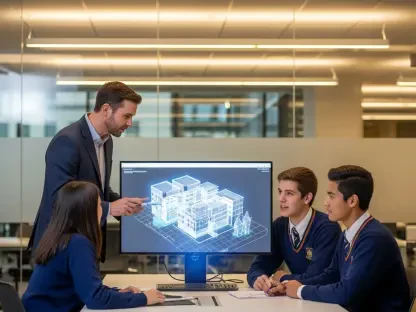
This newfound understanding directly shaped the Turbo GatorBots’ Innovation Project, elevating it from a simple school assignment to a sophisticated technological proposal. The team identified a core problem in archaeology: the irreversible destruction that can occur during physical excavation. “When you dig in the spot, you can never recover it,” explained Dennis Chi. “If you dig without any information, it leads to destroying artifacts and nature.” In response, their solution focused on advanced, non-invasive analysis. They proposed a system that integrates radar and 3D modeling to create a detailed map of what lies underground before any digging begins, supplemented by artificial intelligence to process the data and fill in missing information about potential artifacts identified through remote sensing. To refine this ambitious concept, they consulted not only with archaeologist Charles Cobb but also with engineers at the University of Florida’s Malachowsky Hall. Cobb was deeply impressed by their approach, stating, “There weren’t any shackles on their thinking… Their questions about remote sensing, AI, and other things were really sophisticated.”
Forging Skills for a Collaborative Future
Perhaps the most significant outcomes of the competition are the invaluable life skills that are woven into its very fabric. The process is inherently collaborative, fostering a dynamic that Charles Cobb observed as closely mirroring that of a real archaeological team, where diverse expertise is essential for success. Andrew Zhao, a member of the Turbo GatorBots, articulated the value of this intellectual diversity perfectly: “If all of us have the same ideas and personality, then there’s no difference from one person being on a team… You need people to constantly give their opinions to improve.” This environment teaches students not only to contribute their own ideas but also to listen to, respect, and build upon the perspectives of others. This culture of collaboration extends beyond individual teams as well. Jacob Li noted that they actively learn from their competitors, observing other teams’ strategies not with envy, but as a source of inspiration for future improvement, fostering a spirit of collective growth rather than cutthroat rivalry.
Beyond teamwork, the competition serves as a powerful crucible for building individual confidence and communication abilities. The requirement to deliver a five-minute presentation on their Innovation Project pushes students out of their comfort zones, transforming what often begins as nervousness into what Andrew Zhao described as “excitement and joy.” This experience in public speaking and defending one’s ideas before a panel of judges is a critical skill that will serve them in any future academic or professional endeavor. The holistic nature of the program ensures that personal growth is as much a goal as technical mastery. James Du provided a powerful summary of these multifaceted benefits, stating, “You get to make new friends, go outside, and cooperate with other people. You get over your fear of public speaking. You get core values by being nice to people… And it’s a lot more fun than sitting in the classroom.” It is a compelling testament to the power of experiential learning to engage students on multiple levels, fostering a well-rounded skill set that classrooms alone often cannot provide.
The Enduring Legacy of Experiential Learning
Ultimately, the First Lego League competition proved to be far more than a contest of technical skill; it functioned as a carefully designed educational ecosystem. By grounding complex STEM challenges in the rich, story-driven context of archaeology, the program successfully demonstrated how the excitement of technology could be a powerful catalyst for teaching profound lessons in research, critical thinking, and collaborative innovation. The journey of the Turbo GatorBots served as a compelling testament to this model, showcasing how young students, when given the right tools and mentorship, could develop a sophisticated understanding of a complex academic field and propose thoughtful, technology-driven solutions to its real-world problems. The competition cultivated a truly well-rounded skill set, proving that technical proficiency and essential human skills like communication and resilience were not mutually exclusive but were, in fact, deeply intertwined paths to success.