
In the heart of Silicon Valley, where innovation drives a global economy, the educators tasked with shaping the next generation of minds face a profound and deeply personal challenge: the inability to afford a home in the community where they work. The Palo Alto Unified School District (PAUSD) is directly confronting this stark reality with its pioneering staff housing development, a bold response to a regional affordability crisis that has long threatened the stability of its educational workforce. With the median home price soaring to an astonishing $3.6 million in 2024 and local zip codes ranking among the nation’s most expensive, the average teacher salary of approximately $137,128 simply cannot compete. This chasm forces many dedicated teachers into grueling, multi-hour commutes, draining their energy and disconnecting them from the very students and families they are committed to serving. The district’s new initiative, however, represents a potential turning point in this ongoing struggle.
A Bold Initiative Takes Root
A Tangible Solution to an Urgent Problem
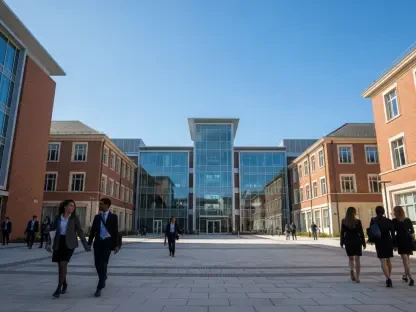
The 231 Grant Avenue Housing Project, a modern, multi-story development strategically located near California Avenue, stands as a concrete answer to an abstract economic problem. After commencing construction in 2023, the facility has now opened its doors, beginning to welcome its first educator residents into subsidized units designed exclusively for district staff. This project is more than just a building; proponents view it as a critical investment in the district’s most valuable asset—its people. By offering below-market-rate housing, PAUSD aims to not only attract but also retain highly qualified teachers and staff who would otherwise be priced out of the area. Former PAUSD Board member Jennifer DiBrienza articulated this sentiment, framing the development as a powerful symbol of the community’s commitment to its educators. She stated, “This project represents our appreciation for and celebration of our staff and all they do for our students and families every day.” It is a tangible acknowledgment of their contribution and a strategic move to ensure their continued presence in the community.
The initiative’s core purpose extends beyond mere housing provision; it seeks to fortify the very fabric of the local educational ecosystem. When educators are forced to live dozens of miles away, the consequences ripple throughout the school community. The daily toll of a long commute can lead to teacher burnout, reducing their capacity for after-school activities, parent-teacher conferences, and spontaneous student support. Furthermore, a workforce disconnected from the local community can struggle to build the deep, meaningful relationships that are foundational to effective teaching. By providing a pathway for staff to live where they work, the 231 Grant Avenue project aims to foster a more integrated, engaged, and stable faculty. This proximity allows educators to become true community members, participating in local events, understanding neighborhood dynamics, and ultimately, building stronger rapport with their students. The development is therefore positioned not just as a recruitment tool, but as a foundational element for a healthier and more resilient school district.
Voices from the Classroom
For many educators on the front lines of the housing crisis, the new development is a welcome and necessary intervention. History teacher Corbin Dodd championed the project, viewing it as a practical “mechanism to close that gap” between the modest salaries of public school teachers and the significantly higher incomes common in the surrounding tech industry. He expressed broad support for any social services that can be provided to teachers, believing that access to subsidized housing will unequivocally improve their quality of life and professional longevity. Dodd also highlighted the direct impact of long commutes on a teacher’s daily effectiveness, noting that the exhaustion from hours spent in traffic can diminish the energy and focus required in the classroom. More profoundly, he underscored the importance of educators being embedded within the community they serve. “Teaching is such a relationship-driven profession that I think it’s important to learn about the community you serve,” he argued, suggesting that living locally will foster a deeper understanding and stronger connections with students and their families.
However, the project’s reception is not universally celebratory, with some educators offering a more measured and critical perspective. Francisco Asmaeil, a social studies teacher at Greene Middle School who has commuted from a rent-controlled apartment in San Francisco for over a decade, provided a stark dose of reality. He characterized subsidized housing not as a generous perk but as a “structural necessity” in an economic climate that has rendered Palo Alto inaccessible to middle-income professionals. While supportive of the project’s underlying concept, Asmaeil raised a crucial concern about its actual affordability for the very people it is designed to help. In a candid revelation, he shared, “The rent I qualified for is way more expensive than what I pay for in my rent-controlled apartment in San Francisco.” This highlights a potential misalignment between the subsidized rates and the financial realities of some staff members, underscoring the “unfortunate truth” that even with such interventions, the local housing market remains fiercely competitive and out of reach for many.
Overcoming Obstacles and Looking Ahead
The Financial Tightrope
The path to realizing the 231 Grant Avenue project was fraught with significant financial and political challenges, particularly concerning its funding model. During the approval process in 2023, former board member Todd Collins cast the sole dissenting vote against the initiative. He clarified that his objection was not to the concept of staff housing but to the initial plan to finance it directly from the district’s General Fund. This fund is the lifeblood of the district’s daily operations, covering everything from teacher salaries and classroom supplies to special education programs. Collins’ concern, shared by others in the community, was the direct financial trade-off this would create, potentially pitting the need for housing against the need for competitive compensation and essential educational resources. Jennifer DiBrienza acknowledged this widespread apprehension, noting that “many in the community and some members of the board and administration were hesitant to invest millions of dollars of our reserves into a first-of-its-kind project.” This debate highlighted the difficult choices districts face when trying to address systemic issues with limited public funds.
In a pivotal turn, the district successfully navigated these financial concerns by completely overhauling the project’s funding structure, a move that proved critical to its eventual success. Rather than drawing from the sensitive General Fund, the administration pivoted to secure external sources of capital. This revised plan leveraged a powerful combination of public and private partnerships, most notably securing a substantial $30 million grant from Facebook. In addition to this major corporate contribution, the project received crucial support from the county’s housing fund, further diversifying its financial foundation. This strategic shift not only alleviated the concerns of board members and the community but also protected the district’s core operational budget from the development’s costs. The ability to secure such significant external investment demonstrated a creative and collaborative approach to problem-solving, transforming a financially contentious proposal into a fiscally responsible and widely supported initiative that could serve as a model for other districts.
A Blueprint for What’s Next
The completion of the 231 Grant Avenue project was seen not as a final solution but as the beginning of a crucial learning process. Positioned as a pilot program, its performance and reception by staff were closely monitored to determine the viability of future, perhaps even larger, housing initiatives. Jennifer DiBrienza emphasized this experimental nature, explaining that the project provided an invaluable opportunity to “work out the kinks” associated with developing and managing staff housing. Its success rested not only on its occupancy rates but also on the satisfaction of its teacher and staff residents. The experience gained from this initial venture provided the district with a real-world case study, offering critical insights into everything from financing and construction to resident selection and property management. While acknowledging that one building could hardly be a “cure-all” for the region’s deep-seated housing crisis, supporters viewed it as a promising and tangible first step toward a more sustainable future for the district’s workforce. The project’s journey from a contentious proposal to a finished reality demonstrated that with creative financing and community partnership, a school district could indeed take a direct role in addressing the economic pressures facing its employees.