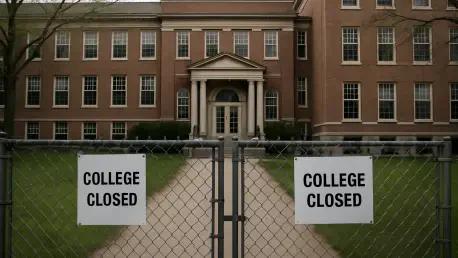

The closure of a college often feels like a final, irreversible ending, erasing decades of history and community with the turning of a key, but a new model of institutional survival suggests that a legacy can be intentionally preserved even after the campus itself is gone. When an institution ceases to exist as an independent entity, its spirit—embodied by its mission, faculty, students, and alumni—faces an uncertain future. This raises a critical question for the landscape of higher education: Can the core identity of a college be successfully transplanted, or does it inevitably fade with the name on the diploma?
When the Campus Gates Close for Good What Becomes of Its Spirit
The shuttering of a college represents more than the loss of a physical space; it signifies the dissolution of a unique academic culture and community. For generations of graduates, an alma mater is a touchstone of personal and professional identity, a source of lifelong connections and pride. When that institution disappears, alumni are left with a shared history tied to a place that no longer operates, creating a sense of displacement and loss. The traditions, the specific educational philosophy, and the network that defined the college experience are suddenly at risk of becoming mere historical footnotes.
The challenge, therefore, lies in untangling the college’s tangible assets from its intangible spirit. While buildings can be sold and endowments transferred, the essence of an institution is far more complex. It is carried in the pedagogical approach of its faculty, the specific focus of its curriculum, and the collective memory of its community. For a legacy to endure, any preservation effort must look beyond financial and physical transfers to address how these core cultural and academic elements can continue to thrive in a new environment, ensuring that the mission that once animated the campus is not lost.
The Unseen Crisis in Higher Education Why More Colleges Are Facing Closure
Across the country, a quiet but potent crisis is unfolding, particularly for smaller, private colleges. These institutions are weathering a perfect storm of mounting pressures, including a consistent decline in student enrollment, persistent financial instability, and the increasing burden of regulatory oversight. Unable to rely on large endowments or widespread name recognition, many find themselves in a precarious position where a single downturn in admissions or a negative regulatory finding can trigger a financial spiral from which recovery is impossible.
This trend carries a significant human cost. For students, a sudden closure can derail their educational journey, forcing them into a complex and often stressful transfer process. Dedicated faculty and staff, many of whom have invested their entire careers in the institution, face abrupt unemployment and the loss of a close-knit professional community. Moreover, generations of alumni experience the profound loss of their alma mater, a cornerstone of their personal history. The case of Labouré College of Healthcare, a Massachusetts-based institution, serves as a poignant microcosm of this national trend, embodying the challenges that are forcing more and more colleges to confront their own mortality.
Deconstructing the Survival Plan The Labouré Curry Model
In a strategic move to salvage its core mission, Labouré College of Healthcare forged a lifeline through an acquisition by nearby Curry College. Rather than a complete dissolution, this agreement facilitates the transfer of Labouré’s flagship nursing program, ensuring its continuation under a new administrative umbrella. This model prioritizes the preservation of the program’s primary academic function, offering a blueprint for how a vital educational service can outlive its original institutional home.
To house this new function, the two institutions collaborated to create the Labouré Center for Advancing Healthcare Opportunity at Curry College. This dedicated center does more than simply absorb a program; it provides a distinct identity and space for Labouré’s mission to continue. By retaining the Labouré name in this new capacity, the model acknowledges the history and reputation of the shuttering college while integrating it into the larger, more stable framework of the acquiring institution. This structural approach ensures that the legacy is not just remembered but actively carried forward.
Critically, the plan secures the human element essential for continuity. Curry College has committed to hiring a significant portion of Labouré’s nursing faculty and staff, a decision that ensures consistency in curriculum, teaching philosophy, and student support. To further maintain the community fabric, the plan integrates Labouré’s alumni council into the new center. This provision offers past graduates a continued connection to their alma mater’s legacy, preserving the network and sense of belonging that are central to the college experience.
From Warning Signs to a New Beginning The Data and Decisions
The path to closure for Labouré was paved with clear and mounting challenges, as the numbers told an undeniable story. Between 2018 and 2024, the college’s enrollment plummeted by over 37%, leaving it with just 530 students and creating an unsustainable financial reality. This sharp decline in tuition revenue, a primary source of income for many small colleges, made it increasingly difficult to maintain operations and invest in necessary resources, forcing leadership to seek a more drastic solution.
The institution also navigated a precarious regulatory tightrope. In 2023, the state nursing board issued a warning after students in the associate nursing program fell below the required 80% first-time pass rate on a national licensure exam. Although the college successfully addressed the issue, leading to the restoration of full approval in May 2024, the incident highlighted the intense pressure and narrow margins for error that specialized institutions face. This regulatory scrutiny, combined with financial woes, underscored the vulnerability of the college’s position.
Despite these challenges, the transition was framed by an official pledge from Curry College’s leadership to uphold Labouré’s distinct mission. A key part of this mission was serving a diverse, underserved, and often adult student population—a demographic that the new center is committed to supporting. This promise was backed by a significant financial commitment, as Labouré’s $9.4 million endowment was pledged to fund the new nursing center, securing its future and ensuring that the financial legacy of the college would directly support the continuation of its most vital work.
A Blueprint for Legacy Preservation Strategies for Other Institutions
The Labouré-Curry model offers a compelling blueprint for other institutions facing existential threats, and its success hinges on several key strategies. The first and most critical step is identifying a mission-aligned partner. An acquiring institution must share core values and educational goals to ensure that the spirit of the closing college’s programs is not lost in translation. A partnership founded on a shared vision for student success is far more likely to result in a genuine continuation of legacy rather than a simple asset liquidation.
Furthermore, a successful transition plan must put people first. This involves creating a clear and supportive framework for students and faculty, minimizing disruption and uncertainty. Actionable steps, such as guaranteeing credit transfers, freezing tuition rates for transferring students, and extending employment offers to faculty and staff, are essential for building trust and ensuring a smooth integration. Prioritizing the human element demonstrates a commitment not just to a program, but to the people who give it life.
Finally, preserving an institutional legacy requires transferring more than just assets; it requires a deliberate effort to maintain identity. This can be achieved through concrete actions such as brand integration, like the creation of the Labouré Center at Curry, which keeps the name and its associated goodwill alive. Equally important is the continuation of alumni networks and traditions within the new structure. By thoughtfully weaving the history, culture, and community of the closing institution into its new home, a college’s legacy could indeed survive its own closure, evolving into a new form that honors its past while embracing the future.