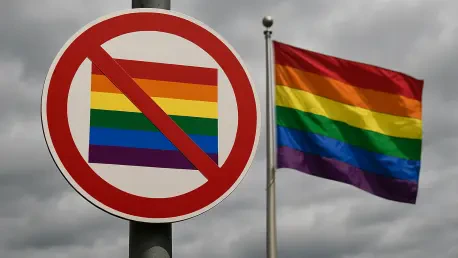

The delicate balance between maintaining a standardized campus aesthetic and fostering an environment of inclusive self-expression has sparked a profound debate at Boston University following the administration’s controversial decision to enforce a ban on outward-facing window displays. While universities often implement neutral facility policies to manage property appearance, the sudden removal of Pride flags and personal signage from office windows triggered an immediate and vocal outcry from faculty and students who viewed the action as a direct affront to the institution’s stated commitment to diversity. The resulting friction highlighted a growing disconnect between administrative protocol and the cultural expectations of a modern academic community, where symbols of identity frequently serve as essential tools for creating safe and welcoming spaces. This conflict quickly escalated beyond a simple dispute over building regulations, evolving into a significant test of leadership for the university’s new administration under the gaze of national advocacy groups and internal stakeholders.
The Intersection of Facility Management and Symbolic Identity
The controversy began when university staff started enforcing a long-standing but previously overlooked policy that prohibited the placement of any flags, posters, or personal items in the windows of campus buildings. Administrative officials initially framed the move as a routine effort to maintain the visual integrity of the university’s architecture and ensure a professional appearance across the urban campus. However, the timing and specific targets of the enforcement, which were predominantly Pride flags displayed by faculty members, led many to believe that the policy was being used to suppress specific viewpoints rather than simply to standardize building facades. Professors and staff members reported receiving formal directives to clear their windows, which they interpreted as a step backward for a campus that has long marketed itself as a progressive and inclusive institution. The rigid application of these rules created a sterile atmosphere that many felt was at odds with the vibrant academic discourse that defines the university’s daily life.
In response to the directives, a coordinated wave of resistance swept through the academic departments as faculty members refused to comply, instead opting to display even more symbols of solidarity in defiance of the ban. A formal letter of grievance was drafted and sent to the university leadership, signed by hundreds of employees who argued that the enforcement of the policy was discriminatory in its practical effect, if not its intent. This internal pressure was significantly amplified when the Foundation for Individual Rights and Expression intervened, reminding the administration that expressive rights within a university setting are fundamental to the pursuit of knowledge. The surge of visibility across the campus served as a visual protest, making it clear that the community was unwilling to sacrifice its symbolic identity for the sake of administrative uniformity. This collective action placed the university leadership in a difficult position, forcing a choice between policy adherence and community trust.
Reconciling Institutional Values with Community Expectations
President Melissa Gilliam eventually addressed the growing unrest by issuing a formal apology and announcing a temporary suspension of the flag removal policy to allow for a period of reflection and dialogue. In her communication to the university community, she acknowledged that the enforcement of the rules had caused genuine harm, particularly among LGBTQIA+ individuals who viewed the flags as vital markers of safety and belonging. Gilliam recognized that while policies are intended to create order, they cannot be applied in a vacuum that ignores the lived experiences and psychological well-being of the students and faculty they govern. The administration’s decision to pause the ban was seen as a necessary concession to de-escalate the tension and restore a sense of partnership between the central office and the various academic units. This pivot signaled a realization that the university’s reputation for inclusion was more valuable than the strict maintenance of its aesthetic guidelines.
The resolution of the immediate conflict provided a foundation for a broader re-evaluation of how the institution handled the complex intersection of private expression and public space. University leaders initiated a series of listening sessions and working groups tasked with drafting a new set of guidelines that balanced the need for facility maintenance with the protection of expressive rights. These discussions focused on establishing clear, content-neutral standards that allowed for personal displays while addressing legitimate safety and maintenance concerns. By prioritizing transparency and collaboration, the administration sought to move toward a model where policy development was an inclusive process rather than a top-down directive. The transition into this new phase of governance demonstrated that institutional flexibility is a strength in an evolving cultural landscape. Ultimately, the university chose to embrace the visibility of its diverse population as a core component of its identity, ensuring that the campus remained a space where all members felt empowered to represent their values.