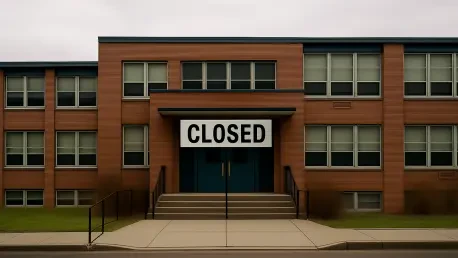

The Douglas County School District is teetering on the edge of a financial precipice, confronting a stark reality defined by a $4 million shortfall this fiscal year and an even more daunting $5.2 million structural deficit projected for the next. This escalating crisis has compelled the Board of Trustees to call a special meeting on January 7, where the fate of employees, schools, and the district’s autonomy will hang in the balance. The agenda is filled with drastic proposals, signaling that the time for incremental adjustments has passed and that fundamental, and potentially painful, changes are imminent. For parents, teachers, and staff, the coming weeks represent a period of profound uncertainty as they await decisions that will reshape the educational landscape of the entire county and determine its path toward fiscal solvency or continued instability.
Grappling With a Financial Emergency
The district’s leadership is now faced with making monumental decisions under immense pressure, considering both immediate cuts and long-term strategic shifts to navigate the crisis. The proposals on the table are not just about balancing a budget; they are about fundamentally restructuring the district to survive.
The Proposal for Drastic Measures
At the heart of the upcoming board meeting are two critical and interconnected actions that could profoundly alter the district’s operations. The first is a formal proposal to declare a “Severe Financial Emergency,” a designation reserved for districts in extreme fiscal distress. This is not merely a symbolic gesture; if the board confirms that the district’s general fund balance has fallen below the statutory threshold of four percent of its expenditures, it will be legally required to notify the Nevada Department of Taxation. Such a declaration would trigger a state-supervised corrective action plan, effectively placing the district’s financial decision-making under external oversight to enforce a path back to stability. The second measure, directly tied to this financial reality, is a potential Reduction in Force (RIF). This action would target classified and classified management employees, leading to layoffs justified by a severe lack of funds. It represents the immediate human cost of the budget deficit, threatening the livelihoods of essential staff who support the district’s daily functions.
A Long-Term Strategy of Consolidation
Beyond the immediate crisis response, the board is also set to engage in a discussion-only session on a more permanent and strategic solution: school consolidation. This long-term approach aims to address the root causes of the structural deficit by realigning the district’s physical footprint with its current and projected student population. The administration is tasked with presenting a range of potential scenarios, carefully analyzed based on enrollment trends and the operational costs of its various facilities. The ultimate objective is to develop a comprehensive budget reduction plan that would not only close the immediate gap but also pave the way for a balanced general fund by the next year. While the prospect of closing schools is a deeply sensitive issue for any community, it is being positioned as a necessary, forward-thinking strategy to ensure the long-term viability of the district. This conversation will force stakeholders to confront difficult choices about the future shape and size of public education in Douglas County.
Unpacking the Roots of the Crisis
The district’s financial turmoil is not the result of a single event but a confluence of declining revenue, rising costs, and controversial policy decisions that have compounded over time. Understanding these intertwined factors is crucial to grasping the full scope of the challenge.
Declining Enrollment and Contractual Pressures
A significant driver of the district’s financial distress is a persistent and steep decline in student enrollment, which has seen a loss of 1,071 students over the past nine years. Since state funding is allocated on a per-student basis, this demographic shift has directly translated into a substantial reduction in revenue, creating a widening gap between income and expenditures. This foundational problem has been exacerbated by complex and contentious financial obligations. Recently, the board voted to deny wage increases for the transportation department, a move that highlights the difficult trade-offs being made. Concurrently, the district is navigating a tentative $920,000 contract agreement with the teachers’ union. This already delicate negotiation was further complicated by the discovery that an incorrect salary schedule had been in use for the past two years, introducing an unforeseen liability and adding another layer of financial pressure that the district is ill-equipped to handle amidst its other budgetary woes.
Board Policies and Untapped Revenue
The situation was further complicated by criticisms leveled against the school board, elected four years ago, which some community members argued had become distracted by national political issues at the expense of local fiscal oversight. A specific policy change banning certain pronouns reportedly led to the district becoming ineligible for various grants, effectively closing off potential revenue streams at a time when they were most needed. In the face of these challenges, members of the public presented a series of proactive and previously unexplored solutions. It was suggested that the district could actively recruit students from nearby South Lake Tahoe to bolster enrollment numbers. Further proposals involved seeking reimbursement by billing Medicare for eligible student services, such as speech therapy, and conducting a thorough audit to ensure the district received all federal and state funding it was entitled to for students with Individualized Education Programs (IEPs). These community-driven ideas represented a call for creative financial management and a strategic pivot toward maximizing all available resources.