
The rapid integration of artificial intelligence into the educational landscape has sparked a dynamic conversation about the future of teaching, with many tools now adept at automating administrative burdens and streamlining routine marking tasks. This technological shift promises to free educators from time-consuming duties, allowing them to focus more on direct student interaction and pedagogical innovation. However, as AI’s role expands, a critical line is being drawn in the sand, particularly concerning high-stakes assessments that determine a student’s future path. A broad consensus, supported by official government guidelines, is solidifying around the principle that while AI is a powerful assistant, it lacks the nuanced judgment required for these pivotal evaluations. The inherent limitations of algorithms in understanding context, creativity, and the subtleties of human potential mean that the integrity of crucial examinations still rests firmly in the hands of experienced human professionals, creating a new and vital demand for their expertise.
The Irreplaceable Value of Human Judgment
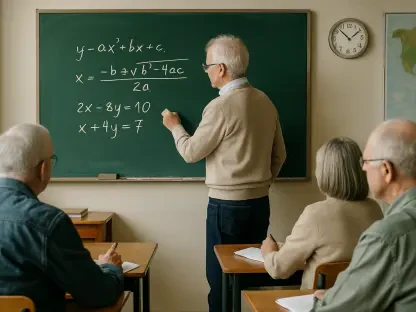
The core reason artificial intelligence falters in the realm of high-stakes assessment lies in its inability to replicate the sophisticated, context-aware analysis of a seasoned educator. An AI can efficiently check for factual accuracy or grammatical correctness, but it cannot truly comprehend the “why” behind a student’s response. It struggles to distinguish between a brilliantly unconventional answer and a simple misunderstanding, or to appreciate the process of reasoning that led to a unique conclusion. For instance, an experienced science teacher evaluating an exam can discern a student’s deep conceptual understanding even if the final answer contains a minor calculation error. They can recognize creativity in an experimental design or identify a spark of insight that a rigid algorithm, trained on predefined correct answers, would simply mark as incorrect. This human capacity for professional judgment is essential for ensuring that assessments are a fair, equitable, and accurate reflection of a student’s knowledge and hard work, rather than just a measure of their ability to conform to an expected pattern.
This deep professional judgment is a fundamentally human skill, blending years of subject matter expertise with an empathetic understanding of the learning process. Unlike AI, which operates on logic and vast datasets, a human examiner brings a layer of interpretation that is vital for fairness. They can account for cultural nuances in a student’s writing, recognize the challenges of applying theoretical knowledge to practical problems, and make holistic judgments about a student’s overall capability. An educator can identify the difference between rote memorization and genuine synthesis of information, a distinction that is often lost on automated systems. This is not merely about being lenient; it is about being precise and just. The integrity of educational qualifications depends on this nuanced evaluation, ensuring that the credentials awarded to students are meaningful and truly representative of their abilities. In this context, the human element is not a weakness but the very foundation of a credible and rigorous assessment system that commands public trust.
A New Avenue for Professional Expertise
The clear boundary of AI’s capability in assessment has illuminated a significant opportunity for experienced educators to apply their specialized skills in a new capacity. Global learning organizations like Pearson are actively seeking teachers to serve as examiners, placing them at the heart of maintaining the integrity of national qualifications. This role is a direct response to the need for human expertise that technology cannot supplant. By becoming an examiner, a teacher transitions from shaping learning in the classroom to safeguarding the standards of achievement on a broader scale. They become the crucial arbiters who ensure that every student’s work is evaluated with the fairness, depth, and professional rigor it deserves. In an era where automation is prevalent, these expert teachers stand as the essential human gatekeepers of academic quality, validating the qualifications that shape careers and open doors to higher education and professional life for countless individuals.
For the educators who step into these roles, the benefits extend far beyond simply applying their expertise; it is a significant avenue for professional and personal growth. Serving as an examiner provides unparalleled insight into national performance standards and assessment criteria, knowledge that can be brought back to the classroom to enrich their own teaching practices. It offers a unique form of professional development, sharpening analytical skills and deepening subject matter knowledge. Furthermore, this work provides a flexible source of additional income that can complement a teaching career. It also opens doors to a wider professional network, connecting educators with peers and assessment specialists from across the country. This experience is a recognized enhancement to a professional resume, demonstrating a commitment to academic standards at the highest level. Typically, the role requires a degree, a teaching qualification, and at least a year of recent, relevant teaching experience, making it an accessible and rewarding path for dedicated professionals.
Charting a Course for Collaborative Futures
The evolution of technology’s role within education ultimately served to crystallize the indispensable value of the expert human teacher. Rather than rendering educators obsolete, the rise of AI clarified their most critical function: exercising nuanced, context-sensitive professional judgment that machines could not replicate. The conversation shifted from one of replacement to one of augmentation, where technology handled the routine and freed professionals to focus on the complex. This dynamic led to the formal recognition and expansion of opportunities for seasoned educators to apply their deep subject matter knowledge in roles that directly upheld academic integrity. The growth in demand for human examiners was a testament to the fact that while algorithms could process data, only experienced teachers could truly assess potential, creativity, and understanding, ensuring that the evaluation of human achievement remained a fundamentally human endeavor.