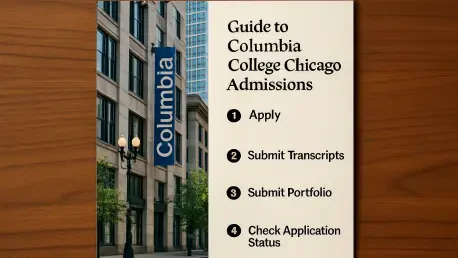

For countless aspiring artists, the path to a professional creative career often feels like a narrow, fiercely competitive journey, but one institution in the heart of downtown Chicago has built its reputation on widening that path. Columbia College Chicago stands as a nationally recognized beacon for those driven to transform their passion for arts, media, and communications into a viable profession. The college’s core mission is to provide broad access to a hands-on, immersive education, creating an environment where creative talent is not just honed but strategically prepared for the demands of the professional world. This philosophy directly shapes an admissions process that prioritizes potential and artistic voice, offering a distinct alternative to more traditional academic gateways. Instead of a rigid, numbers-driven evaluation, the college seeks to identify individuals with a clear vision and a raw, demonstrable commitment to their craft, fostering a diverse community of storytellers, designers, performers, and media makers.
Understanding the Admissions Philosophy
An Inclusive and Holistic Approach
Columbia College Chicago is defined by an admissions philosophy rooted in accessibility, reflected in an acceptance rate of approximately 90%. This figure is not an indication of relaxed standards but rather a testament to the institution’s commitment to providing opportunities for a wide spectrum of creative individuals. The college operates on a rolling admissions basis, a system that allows for the continuous review of applications as they are submitted. This contrasts sharply with the high-stakes, single-deadline approach common elsewhere. Prospective students are strongly encouraged to apply early in the cycle, as this proactive step can yield significant advantages. Early submission not only enhances the likelihood of acceptance into highly competitive programs but also provides applicants with priority access to a broader pool of financial aid, institutional scholarships, and campus housing options. This model rewards preparedness and allows the admissions team to engage with applications more thoughtfully over a longer period, ensuring each candidate receives thorough consideration.
The Emphasis on Creative Potential
The evaluation of applicants is guided by a holistic review process that looks beyond conventional academic metrics to assess a candidate’s creative promise and unique artistic perspective. While consistent performance in college-preparatory coursework is valued as an indicator of academic readiness, the college intentionally does not publish a minimum GPA requirement. This is because the admissions counselors are trained to construct a comprehensive profile of each applicant, weighing multiple factors to identify potential. Far more significant than a single grade or score is the demonstrated evidence of a student’s engagement with their chosen field. Originality, a distinctive creative voice, and a clear, passionate commitment to a specific artistic discipline are paramount. For many of the institution’s more than 40 majors, this potential is showcased through program-specific submissions. These can include a meticulously curated creative portfolio, a live or recorded audition, or a compelling writing sample, each serving as a direct window into the applicant’s talent and dedication.
Crafting a Standout Application
Beyond Standardized Metrics
In a move that underscores its focus on authentic creative ability, Columbia College Chicago maintains a test-optional admissions policy. Applicants are not required to submit SAT or ACT scores, a decision that reflects the college’s belief that standardized tests are often poor predictors of success in the creative industries. This policy shifts the evaluative focus toward materials that provide a more nuanced and personal understanding of the candidate. A strong academic transcript remains an important component, demonstrating a student’s diligence and preparedness for college-level work. However, equal, if not greater, weight is given to the qualitative elements of the application. The personal essay becomes a critical platform for applicants to articulate their interests, goals, and unique perspective. Similarly, detailed descriptions of extracurricular involvement, relevant work experience, and volunteer activities can paint a vivid picture of a candidate’s passion, initiative, and engagement with the world around them, qualities that are highly valued within the college’s collaborative and project-based learning environment.
The Decisive Role of Creative Materials
For a majority of programs, the creative submission is the cornerstone of the application, serving as the most direct and powerful expression of an applicant’s readiness and vision. Whether it is a portfolio of visual art, a reel of film work, a collection of written pieces, or a performance audition, this component allows applicants to showcase their technical skills, conceptual thinking, and artistic identity. It is here that prospective students can truly differentiate themselves, moving beyond grades and essays to present tangible proof of their capabilities and potential. The admissions committee meticulously reviews these materials to gauge not only current skill levels but also the applicant’s capacity for growth and innovation. Furthermore, the college actively seeks to reward exceptional talent through a variety of merit-based and talent-based scholarships. These awards are often directly tied to the strength of the creative submission, making a well-prepared and thoughtfully curated portfolio or audition a critical factor not only for admission but also for securing significant financial support.
A Conclusive Look at the Application Journey
The admissions process, when viewed retrospectively, revealed itself as a clear reflection of the institution’s core values. The emphasis on a holistic review and the de-emphasis on standardized testing affirmed the college’s commitment to identifying raw talent and passion over purely quantitative measures. Applicants who succeeded had understood that their creative portfolios and personal statements were not just supplementary materials but the central narrative of their application. They had effectively communicated their unique artistic voice and demonstrated a clear trajectory for their future creative careers. The rolling admissions structure had rewarded those who were organized and proactive, while the availability of talent-based scholarships had provided tangible validation for their artistic endeavors. Ultimately, the journey had been less about clearing a series of academic hurdles and more about making a compelling case for one’s potential as a future creator, innovator, and contributor to the arts and media landscape.