
The escalating complexity of modern educational systems demands leaders equipped with more than just theoretical knowledge; it requires professionals who can navigate high-stakes scenarios with confidence and practical wisdom. As traditional training methods struggle to bridge the gap between theory and application, virtual reality (VR) is emerging as a powerful pedagogical tool poised to fundamentally reshape how educational administrators are prepared for the multifaceted challenges of their roles. By offering a dynamic and immersive platform, this technology moves beyond the confines of the classroom, providing a new paradigm for developing the critical management and leadership skills essential for effective governance.
The New Frontier of Skill Development
From Passive Lectures to Active Immersion
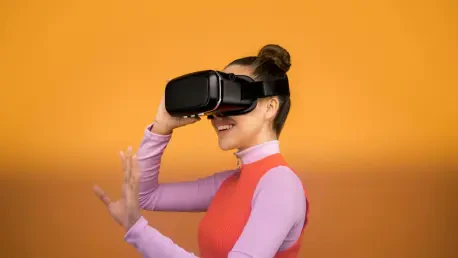
Virtual reality marks a profound and necessary shift away from the passive, theory-based learning models that have long dominated professional development and towards an active, hands-on paradigm. Within these meticulously crafted digital environments, trainees are no longer merely observers absorbing information from a lecture or case study; they become active participants who must engage directly with the challenges presented. This immersive approach fosters a level of deep engagement that significantly boosts both the comprehension and retention of complex information. By allowing future administrators to walk through a virtual school, interact with simulated staff, and make decisions that have tangible consequences within the simulation, VR effectively bridges the crucial gap between academic knowledge and real-world application. This experiential learning process is instrumental in building not just knowledge, but also the muscle memory for effective leadership, allowing for repeated practice and refinement of skills in a safe, controlled context.
Mastering Leadership Through Realistic Simulation
One of the most significant advantages of VR lies in its unparalleled capacity for facilitating high-stakes crisis simulation without any of the real-world risks or consequences. Educational leaders can be placed into scenarios where they must manage a sudden and severe budget cut, resolve a major personnel crisis involving disgruntled staff, or coordinate a response to a school-wide emergency. These situations compel them to devise and execute strategic responses under simulated pressure, allowing them to hone their problem-solving and decision-making abilities in a controlled, repeatable setting. Furthermore, the technology enables sophisticated collaborative exercises, placing multiple users into the same shared virtual space to tackle complex challenges as a team. This directly cultivates the essential teamwork and communication skills required for modern educational governance, as leaders learn to negotiate, delegate, and build consensus with their peers in a dynamic and interactive environment.
Enhancing Training with Technology and Forethought
The Power of Data-Driven Improvement
The integration of VR into leadership training inherently allows for powerful, data-driven pedagogical enhancements that traditional methods cannot replicate. As participants navigate simulations and make critical decisions, the underlying system meticulously gathers extensive data on their actions, response times, and overall engagement levels. This wealth of information provides invaluable and objective feedback for program facilitators, offering clear, quantifiable insights into a trainee’s performance, areas of hesitation, and specific skills that require further development. Instead of relying solely on subjective observation, instructors can use this data to identify patterns and pinpoint exact moments where a different approach may have yielded a better outcome. Consequently, training materials and scenarios can be continuously refined and personalized, creating a highly adaptive educational process tailored to the specific needs and learning curves of individual participants, ensuring a more efficient and impactful development experience for every leader.
Broader Implications for Professional Development
The adoption of VR in training signifies a much broader and more fundamental shift toward innovative and effective philosophies in professional development. As educational institutions worldwide continue to face increasingly complex governance and operational challenges, the demand for leaders who can seamlessly blend theory with decisive practice grows more urgent. In this context, VR stands out as a uniquely powerful tool for preparing a new generation of administrators for the realities of their roles. Its relevance is particularly pronounced in the post-pandemic educational landscape, where digital fluency has become a prerequisite. The technology offers an accessible, scalable, and deeply immersive training solution that can be deployed regardless of physical location, promoting a more inclusive and adaptive form of professional education that meets the needs of a modern, distributed workforce. This evolution prepares leaders not just for current challenges but for the future of education itself.
Navigating the Challenges and Ethical Landscape
While the potential of virtual reality in leadership training is immense, its widespread implementation is not without significant considerations that must be addressed strategically. Among the most prominent are the logistical hurdles, which include the high initial investment required for hardware and sophisticated software, ongoing issues of institutional accessibility for less-resourced districts, and the critical need for specialized technical training for both instructors and participants. Beyond these practical logistics, the immersive and data-rich nature of VR raises important ethical questions that demand careful thought. The collection of granular performance data brings concerns about data privacy and security to the forefront. Moreover, the potential psychological effects of prolonged exposure to highly realistic, and at times stressful, virtual environments necessitate the development and strict adherence to robust ethical guidelines that prioritize and protect the well-being of all participants.
A Glimpse into the Future of Leadership Development
The trajectory of educational management training has been irrevocably altered by the integration of emerging technologies. In this evolving landscape, the role of the human instructor was amplified, not diminished, within a VR-integrated model. These professionals acted as essential guides and facilitators, leveraging their expertise to contextualize the virtual experiences, lead thorough debriefing sessions after simulations, and ensure that the powerful lessons learned were correctly understood and internalized by the trainees. The success of this symbiotic relationship depended on strong, ongoing collaborations between experienced educators and innovative technology developers. This partnership ensured that the VR content created was not only technologically advanced and immersive but also pedagogically sound and firmly grounded in established educational theories. As the technology continued its rapid evolution, its capacity to create nuanced, adaptive, and profoundly impactful training programs for educational leaders signaled a new and transformative era in professional development.