
The traditional boundaries of the collegiate lecture hall have essentially dissolved in early 2026, replaced by a seamless integration of digital intelligence and physical reality that tailors every lesson to the specific neurological and professional needs of the individual student. This transformation represents the rise of a “Continuous Loop” ecosystem, where learning is no longer a terminal event but a constant state of adaptation. As the adaptive learning market reaches a valuation of nearly $4.6 billion, the global educational sector is witnessing a departure from static textbooks in favor of fluid, AI-driven pathways. This movement addresses a critical historical friction: the widening chasm between academic curricula and the hyper-specialized requirements of the labor market. By synthesizing real-time data with personalized pedagogy, institutions are now able to foster a workforce that is not only competent but also highly resilient in the face of rapid technological disruption. The shift focuses on sophisticated, emotionally intelligent frameworks that prioritize verified skill acquisition over mere credit accumulation, ensuring that every hour spent in study translates directly into measurable professional value.
The Technological Foundations of the Modern Campus
Immersive Environments and Verified Credentials
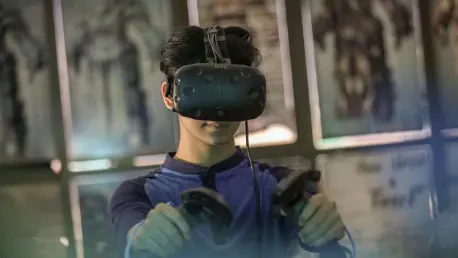
The concept of the classroom has undergone a radical reimagining, transitioning into a fluid, high-fidelity environment known as the Knowledge Theater. These spatial computing hubs leverage advanced digital twins and immersive virtual reality simulations to place students in the center of high-stakes scenarios that were previously impossible to replicate in a school setting. For instance, medical students now practice complex cardiovascular surgeries on hyper-realistic digital patients that respond physiologically to every incision, while engineering students manipulate structural models of smart cities within a physics-accurate digital space. Data collected throughout 2026 indicates that this experiential approach allows learners to master technical subjects 42% faster than those relying on traditional instructional methods. By removing the abstraction of the printed page, these theaters ensure that theoretical knowledge is instantly converted into muscle memory and spatial understanding, bridging the gap between classroom study and the operational demands of high-level professional practice.
This immersive layer is reinforced by a robust “Skill-Verification” Blockchain, which serves as the invisible backbone of academic integrity in an age of synthetic media. To combat the rising tide of credential inflation and the potential for AI-generated fraud, modern institutions have adopted a tamper-proof ledger system that issues Digital Product Passports for every micro-credential and degree earned. This decentralized “Learning Passport” is owned entirely by the student, providing a portable and unalterable record of their specific competencies that can be instantly verified by global employers. When a student completes a specialized module in bio-architectural design or quantum cryptography, the achievement is etched onto the blockchain, eliminating the need for slow, traditional transcript requests. This shift not only secures the transition from education to employment but also empowers the individual to curate a modular professional identity that reflects their true capabilities. The result is a high-trust talent marketplace where every skill is authenticated and every achievement is globally recognized.
Bridging the Global Digital Divide
Technological progress in 2026 is no longer an exclusive luxury for elite urban institutions; it is increasingly defined by the radical expansion of accessibility through Mobile-First and Offline AI. Recognizing that a significant portion of the global population resides in areas with inconsistent connectivity, developers have successfully compressed powerful AI tutors to run locally on low-bandwidth, affordable devices. This localized AI architecture means that a student in a remote village can interact with a private digital mentor without requiring a constant high-speed internet connection. These “edge-computing” tutors provide the same caliber of personalized instruction as those found in high-tech city hubs, effectively democratizing elite education. By moving the computational heavy lifting to the device itself, the system ensures that the “Digital Divide” is narrowed, fostering a more equitable global landscape where geographical location no longer dictates the quality of a person’s intellectual development or their ability to compete in the modern international workforce.
The democratization of these tools has sparked a localized educational revolution, where the focus has shifted toward building a private digital mentor for every learner regardless of their economic background. By removing the requirement for expensive, cloud-dependent infrastructure, these offline AI systems provide high-quality feedback on everything from mathematical proofs to linguistic nuances in real-time. This approach ensures that the “private tutor” experience is a universal right rather than a privileged service. Furthermore, this architecture prioritizes data sovereignty, as the student’s learning patterns and personal data remain stored on their personal device rather than being transmitted to a central corporate server. This decentralized model of education is proving essential for the rapid upskilling of emerging markets, allowing for a diverse range of voices and perspectives to enter the global dialogue. The result is a more resilient and inclusive intellectual ecosystem that values human potential in every corner of the world.
The Evolution of Pedagogy: From Chatbots to Personal Companions
The Rise of Multimodal Learning Mentors
The era of the generic chatbot has officially ended, giving way to multimodal Personal Learning Companions that utilize sophisticated voice and emotion recognition to interact with students. These advanced agents, such as the current Khanmigo 3.0, do not simply provide answers to direct questions; instead, they act as intellectual partners that utilize “Socratic nudges” to guide a learner through the underlying logic of a problem. By analyzing the tone of a student’s voice or the hesitation in their keystrokes, the AI can detect frustration, boredom, or the exact moment of a breakthrough. If a student is struggling with a complex calculus equation, the companion might suggest a different visual representation or provide a real-world analogy related to the student’s personal interests. This level of personalization ensures that the technology facilitates genuine cognitive development rather than offering a shortcut to the final solution. The goal is to cultivate deep understanding, turning the digital tutor into a supportive mentor that adapts to the learner’s unique psychological profile.
This shift toward emotionally intelligent AI represents a fundamental change in the relationship between humans and machines within the learning environment. These companions are designed to foster persistence and critical thinking by strategically withholding the correct answer until the student has demonstrated the necessary logic to reach it. This interactive dynamic mirrors the traditional master-apprentice relationship but at a scale that was previously unimaginable. Moreover, these agents are capable of shifting their instructional style from a supportive coach to a rigorous examiner, depending on the specific goals of the session. This versatility allows for a more holistic approach to education, where the development of the student’s character and intellectual stamina is just as important as the acquisition of factual data. By acting as a constant, adaptive presence, the Personal Learning Companion ensures that no student is left to struggle in isolation, providing a safety net that encourages risk-taking and intellectual curiosity across all age groups.
Empowering Educators Through Instructional Augmentation
Contrary to earlier concerns that artificial intelligence would replace human educators, the technology is now firmly established as a vital tool for “Instructional Augmentation.” By automating approximately 70% of the administrative and repetitive burdens that once plagued the profession—such as grading essays, tracking attendance, and mapping individual lesson plans—AI has liberated teachers to return to their core mission of mentorship. This “Time Dividend” has granted the average K-12 educator an extra 10 hours per week, which is now being reinvested into small-group sessions, one-on-one ethics discussions, and the cultivation of social-emotional intelligence. In this updated hierarchy, the machine handles the data-driven aspects of instruction, while the human teacher provides the moral guidance, empathy, and high-level critical thinking that algorithms cannot replicate. This synergy has transformed the role of the teacher from a lecturer into a facilitator of human potential, significantly improving job satisfaction and student outcomes.
The refocusing on the uniquely human aspects of education has led to a renaissance in mentorship-based learning, where the development of “soft skills” is prioritized alongside technical proficiency. In the modern classroom, teachers use the data insights provided by AI to identify which students require more emotional support or which groups would benefit from collaborative project-based learning. This allows for a more nuanced approach to classroom management, where the educator acts as a creative director of the learning experience rather than a mere conduit of information. Furthermore, this augmentation has enabled teachers to address the diverse ethical challenges of the digital age, guiding students through the complexities of AI ethics, digital citizenship, and the responsible use of synthetic tools. By delegating the mechanical tasks to intelligent systems, schools have successfully reclaimed the human connection that is essential for a well-rounded education. This model demonstrates that technology, when applied thoughtfully, can enhance the human element rather than diminishing it.
Business Transformation and Ethical Safeguards
Lifelong Subscriptions and Industry Alignment
The business model of higher education has undergone a structural pivot away from the “one-time sale” of a four-year degree toward a “Lifelong Subscription” relationship. Leading universities now view graduation not as a final endpoint, but as the beginning of a permanent upskilling partnership where alumni pay a recurring fee to access updated modules and AI-driven career coaching. This ensures that a professional’s skill set remains relevant in an economy where technical curricula evolve in real-time based on the shifting needs of the job market. To facilitate this, tech giants and academic institutions have formed “Industry-Aligned Academies,” co-designing hybrid hubs that merge academic rigor with corporate practicality. Marketing for these programs has transitioned toward “Radical Transparency,” utilizing Answer Engine Optimization to provide prospective students with precise data on the “Wage Premium” they can expect from specific courses. This data-driven approach treats education as a continuous, high-value investment that delivers measurable returns throughout a worker’s entire career.
This subscription-based ecosystem has fostered a new era of corporate-university collaboration, where the “Skill Graph” of the student is perfectly aligned with the real-world needs of the economy. Instead of a static diploma, learners accumulate a dynamic portfolio of verified skills that grow and adapt alongside technological advancements. This model encourages a culture of continuous learning, as professionals can easily dip back into the academic environment to master new tools like bio-hybrid engineering or decentralized finance as they emerge. The integration of Answer Engine Optimization ensures that when an individual queries their personal AI about the most efficient path to a new career, the system recommends accredited, industry-verified modules that are recognized by top-tier employers. This alignment reduces the risk of educational debt by ensuring that every dollar spent is tied to a specific professional outcome. By transforming education into a lifelong service, institutions have secured their financial future while providing students with a reliable roadmap for long-term career success.
Navigating the Humanity Speedbump
As digital integration becomes nearly universal, a concept known as the “Humanity Speedbump” has emerged to protect the cognitive integrity of the learning process from the risks of “metacognitive laziness.” Educators and policymakers have recognized that if AI tools are used as a shortcut to bypass the hard work of thinking, the long-term intellectual capacity of the population could suffer. To mitigate this risk, 2026 has seen a widespread “Assessment Redesign,” where traditional final exams are replaced by “Process-Based Grading.” In this system, the AI evaluates the entire journey of a student’s thought process—how they formulated their questions, how they handled conflicting data, and how they iterated on their mistakes—rather than just the final output. This ensures that the focus remains on the development of critical thinking and problem-solving skills. By rewarding the struggle of the learning process, institutions are preserving the essential human effort required to master complex concepts in a world filled with automated answers.
Data privacy has also become a sovereign dilemma, leading to the establishment of strict regulations that protect a student’s “Failure History.” Following the foundational framework of the EU AI Act, new mandates in 2026 ensure that the mistakes a student makes during their learning journey are not recorded in a way that could be sold to recruiters or used to penalize them in the future. This “Right to Make Mistakes” is viewed as a fundamental component of the human learning experience, allowing students to experiment and fail in a safe, private environment without fear of long-term professional repercussions. By creating a digital firewalled space for intellectual exploration, the system prevents the chilling effect that constant surveillance would have on creativity and risk-taking. These ethical safeguards are crucial for maintaining trust in AI-driven systems, ensuring that technology serves as a tool for empowerment rather than a mechanism for permanent judgment. This balanced approach protects the human element of growth, ensuring that the digital record supports rather than restricts a person’s future potential.
Strategic Directions for an Integrated System
The educational landscape has successfully integrated artificial intelligence, blockchain, and virtual reality to create a system that was both more personalized and more secure than previous models. These advancements allowed for a radical shift in how knowledge was acquired, verified, and updated, ensuring that the global workforce remained aligned with the rapid pace of technological change. Looking ahead, the focus moved toward deeper neural integration and the potential for brain-computer interface assistance to further streamline the transfer of technical information. This trajectory suggested a future where the human mind would be liberated from the burden of rote memorization, allowing it to function as the creative director of innovation. To stay competitive in this evolving environment, students and professionals alike were encouraged to prioritize the development of uniquely human traits such as ethical reasoning and collaborative leadership. The infrastructure established throughout the current year provided a resilient foundation for this journey, balancing the efficiencies of high-tech tools with a renewed commitment to the essential human elements of mentorship and intellectual curiosity.