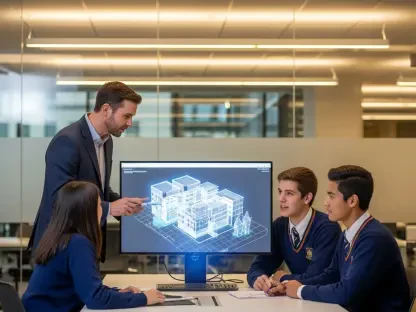

The traditional image of a classroom filled with heavy textbooks and handwritten notes has rapidly faded into history, replaced by a sleek landscape where glowing screens and digital interfaces define the daily experience of millions of American students. Since the massive educational shift that began a few years ago, the prevalence of computers and tablets in the K-12 environment has surged from approximately half of the student body to a staggering 80 percent in 2026. This rapid evolution represents far more than a simple upgrade in hardware; it constitutes a total structural overhaul of instructional delivery and cognitive processing. As school districts across the United States navigate this high-tech reality, the central conflict has shifted from whether technology should be present to how it can be managed effectively. The primary goal is now to ensure that these sophisticated devices act as catalysts for deep learning rather than becoming expensive conduits for student distraction and academic disengagement.
The Drivers of Digital Integration
Assessing Administrative Mandates and Classroom Trends
A significant portion of the modern teaching force now operates under strict professional requirements to utilize digital instructional materials as their primary method of delivery. Currently, roughly one-third of all teachers are mandated by their specific districts or school boards to implement curricula that are mostly or entirely online, a pressure that is felt most acutely within high school science and mathematics departments. This top-down administrative approach has created a diverse and often fragmented landscape where some classrooms have become entirely paperless environments. In these settings, the traditional lecture has been replaced by modules and digital interactive displays, forcing a rapid adaptation of pedagogical techniques. However, the lack of a centralized national standard means that the implementation remains highly inconsistent across different regions, leading to a patchwork of digital literacy levels that vary significantly from one state to another.
The divergence in technology usage is particularly visible when comparing different grade levels, highlighting an ongoing debate regarding the appropriate “dosage” of screen time for developing minds. While high schools often embrace a near-total digital immersion, approximately ten percent of elementary school teachers report maintaining a tech-free or low-tech environment to prioritize foundational tactile and social skills. This intentional resistance at the primary level suggests a growing concern among early childhood educators that premature over-reliance on devices might hinder the development of fine motor skills and face-to-face communication. Without a unified consensus on developmental milestones for digital consumption, schools are left to experiment with various balances. This lack of standardization often leaves parents and educators searching for a middle ground that respects the necessity of modern tools while protecting the cognitive needs of younger learners.
Balancing Academic Potential with Student Engagement
Digital tools undeniably offer the transformative promise of personalized learning and interactive content that can significantly boost classroom engagement when applied with precision. Proponents of these systems argue that technology provides indispensable support for English language learners and students with diverse accessibility needs by offering real-time translation and adaptive text-to-speech features. These platforms allow for highly customized learning paths that automatically adjust to a student’s individual pace, ensuring that no child is left behind due to the rigid speed of a traditional group lecture. Furthermore, the ability to access vast repositories of global information instantly has empowered students to engage in independent research and project-based learning that was previously impossible. This connectivity bridges the gap between theoretical knowledge and real-world application, making the curriculum feel more relevant.
Despite these clear advantages, recent feedback from the classroom suggests that many middle and high school students are beginning to suffer from a phenomenon known as digital fatigue. Research indicates that a growing number of students feel overwhelmed by the constant requirement to interact with screens, with many specifically requesting a return to traditional, offline activities like printed worksheets and physical books. In subjects such as mathematics, nearly half of students reported feeling a sense of boredom or disconnection when lessons were delivered exclusively through online platforms. This tension between the theoretical benefits of constant connectivity and the practical reality of student burnout remains a critical hurdle. To maintain focus, educators must find ways to reintroduce variety into the school day, ensuring that digital engagement does not become a monotonous chore that stifles the natural curiosity and enthusiasm of the learners.
Strategies for Meaningful Implementation
Shifting from Substitution to Strategic Supplementation
The most successful school districts are currently those that have learned to view technology as a sophisticated supplement to human-led instruction rather than a comprehensive replacement for it. Rather than allowing devices to take center stage and dominate the classroom environment, effective educators are using digital platforms for targeted practice and immediate data-driven feedback. These specific tasks would be nearly impossible to manage manually in a classroom of thirty or more students, where a teacher cannot provide instant corrections to everyone at once. By utilizing software to handle repetitive or purely analytical tasks, the educator is freed to focus on higher-order thinking and emotional support. This strategic shift ensures that the technology remains a tool in the teacher’s arsenal, used to enhance the learning process rather than serving as the sole source of information for the students.
Maintaining the “human element” at the forefront of the educational experience has proven to be the most vital factor in preventing the isolation often associated with heavy device usage. Schools that prioritize the relationship between the teacher and the student have found that technology can actually facilitate deeper connections when used to identify specific learning gaps. For instance, a teacher can use real-time analytics from a digital quiz to immediately pivot a lesson or pull a small group of students aside for a physical, hands-on demonstration. This approach ensures that the social aspects of learning, such as collaborative problem-solving and peer-to-peer discussion, are not sacrificed for the sake of technological efficiency. When the digital tool serves the interaction between people, it becomes a bridge rather than a barrier, providing specialized support while keeping the classroom grounded in meaningful, human-centered communication.
Embracing Blended Learning and Active Oversight
To effectively combat the various distractions inherent in internet-connected devices, a growing number of schools are successfully adopting blended learning models that intentionally mix digital tasks with physical materials. This instructional variety helps maintain student focus by breaking the school day into different cognitive modes, preventing the mental passivity that often accompanies prolonged screen use. A typical lesson might begin with a short digital exploration, followed by a vigorous small-group discussion, and conclude with a hands-on experiment or a written reflection on paper. This hybrid approach caters to different learning styles and ensures that students remain active participants in their education. By alternating between the digital and physical worlds, educators can keep the curriculum dynamic and responsive, which significantly reduces the likelihood of students drifting toward unrelated websites or social media.
The ultimate success of these high-tech programs depends heavily on the presence of active supervision and the implementation of robust technical safeguards within the district’s infrastructure. Technology is most effective when teachers remain physically and mentally engaged in the room, monitoring progress in real-time through classroom management software and direct observation. Simply providing a device and expecting a student to remain on task is a recipe for failure; instead, successful schools have integrated “active oversight” into their pedagogical training. Furthermore, technical solutions such as advanced site blockers and restricted access periods are essential to keep students anchored to their specific academic goals. These tools provide a necessary framework for digital safety, allowing students to explore the benefits of the internet within a controlled environment that prioritizes their focus and protects them from harmful content.
Building a Foundation for Future Success
Refining Software Standards and Teacher Development
Establishing long-term success in digital integration required a fundamental shift in how educational software was evaluated and selected by school districts and state boards. Decision-makers began to apply a level of scrutiny to digital platforms that was previously reserved only for physical textbooks, ensuring that every application aligned perfectly with state standards. This rigorous selection process involved analyzing data privacy protections, accessibility features for diverse learners, and the actual pedagogical value of the software. By moving away from “gamified” apps that offered more entertainment than education, schools were able to curate a library of tools that truly supported academic growth. This commitment to quality control ensured that the digital resources provided to students were not just modern, but were also evidence-based and capable of producing measurable improvements in literacy and numeracy.
Beyond the procurement of high-quality tools, the focus of professional development for educators underwent a significant evolution from basic technical training to sophisticated pedagogical integration. It was no longer sufficient for teachers to simply know how to operate a device or log into a portal; they needed to understand how to weave these tools into their specific subject areas effectively. Professional learning communities began to focus on the “how” and “why” of technology, teaching educators how to use data analytics to drive instruction and how to facilitate digital collaboration. This ongoing support ensured that technology served the curriculum rather than dictating it, empowering teachers to become masters of their digital environments. By investing in the human capital of the school system, districts created a sustainable model where technology was a natural and powerful extension of the educator’s existing expertise.
Implementing Next Steps for Digital Maturity
The transition toward a balanced digital environment was completed by adopting several critical next steps that prioritized long-term student wellness and academic integrity. Educators and administrators recognized that the mere presence of technology did not guarantee success, so they established clear policies regarding “screen breaks” and the preservation of physical learning spaces. This holistic approach ensured that students developed a healthy relationship with technology, learning to view it as a professional tool rather than a source of constant entertainment. Furthermore, schools began to involve parents more directly in the digital journey, providing resources to help families manage device usage at home. This coordination between home and school created a unified front, reinforcing the values of focus and responsible citizenship in the digital age.
Final assessments of these strategies showed that the most effective schools were those that remained flexible and willing to adjust their digital “dosage” based on real-time student performance. The move toward a more nuanced application of technology allowed districts to reclaim the classroom as a place of deep concentration and social interaction. By treating digital tools as a sophisticated supplement, schools successfully minimized the risks of distraction while maximizing the benefits of personalized, data-driven instruction. The lessons learned during this period of rapid change provided a blueprint for future educational models, proving that the human element remains the most vital component of a successful school. Moving forward, the emphasis stayed on refining these integrated systems, ensuring that every technological investment directly contributed to a more focused, equitable, and effective learning experience for all students.