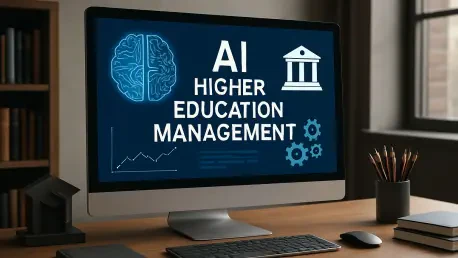

The corridors of higher education are undergoing a profound transformation, driven not by new pedagogical theories but by the silent, pervasive influence of artificial intelligence. This technological wave is moving institutions beyond centuries-old, generalized management models toward a future that is more personalized, proactive, and deeply informed by data. From crafting individual student learning pathways and preemptively addressing academic challenges to optimizing high-level institutional strategy, AI-driven systems are fundamentally redefining the entire student academic journey. This evolution promises to create a more responsive and efficient educational ecosystem, one that enhances student engagement, improves learning outcomes, and streamlines administrative processes for a new era of academic excellence. The integration of these intelligent technologies is no longer a distant possibility but a present reality that is reshaping the very fabric of how colleges and universities operate and fulfill their educational missions.
The Dawn of Personalized Learning
The long-standing educational paradigm of a “one-size-fits-all” curriculum is steadily becoming a relic of the past, as artificial intelligence ushers in an age of unprecedented personalization. By harnessing the power of sophisticated machine learning algorithms, universities can now construct adaptive learning environments meticulously designed to cater to the diverse needs, paces, and preferred learning styles of every individual student. These intelligent systems analyze student interaction with course materials, performance on assessments, and engagement patterns to dynamically tailor educational content, adjust difficulty levels, and provide customized support mechanisms. This transition from a static to a dynamic educational model turns the classroom into a responsive, personalized experience, which has proven to be a critical driver for boosting student comprehension, deepening engagement with subject matter, and ultimately achieving superior academic success. This level of individualization ensures that every student receives the specific resources and challenges they need to thrive.
Delving deeper into the practical application of this tailored approach, AI facilitates the creation of unique academic journeys that were previously impossible to scale. AI-driven platforms can curate learning materials from a vast array of sources, recommending articles, videos, and interactive simulations that align with a student’s specific knowledge gaps or areas of interest. Furthermore, assessment tools powered by AI can move beyond simple multiple-choice questions to evaluate complex problem-solving skills, providing instant, constructive feedback that guides students toward mastery. This adaptive feedback loop not only assists students who may be struggling with certain concepts but also presents advanced challenges to high-achieving learners, preventing stagnation and fostering continuous growth. By creating a more nuanced and effective learning experience for the entire student body, AI ensures that education is not merely about information transmission but about fostering genuine understanding and intellectual development for all.
Proactive Support and Student Retention
One of the most transformative applications of artificial intelligence in higher education management is the deployment of predictive analytics for early and targeted student intervention. Sophisticated machine learning algorithms can now process a multitude of data points in real-time—including grades, class attendance records, library usage, and engagement with online learning platforms—to identify individuals who are at risk of falling behind academically. This data-driven capability enables institutions to shift from a traditionally reactive support model, where help is offered only after a student has begun to fail or actively seeks it, to a decidedly proactive one. By flagging at-risk students before their academic difficulties escalate into major hurdles, universities can implement timely and personalized support strategies. This fundamental change in approach is proving to be a revolutionary tool for substantially improving student retention rates and ensuring a greater number of learners successfully complete their degree programs.
Expanding upon this proactive framework, the insights generated by AI do more than just identify a problem; they are instrumental in connecting students with precise, effective solutions. Once a student is flagged by the system as potentially needing assistance, AI can automatically recommend a tailored suite of resources specific to their individual needs. This could range from scheduling sessions with a subject-matter tutor, connecting them with academic advisors to adjust their course load, or suggesting workshops at the university’s writing center. For non-academic challenges that often impact performance, the system can guide students toward counseling services, financial aid offices, or wellness programs. By creating this intelligent and integrated support network, institutions are building a more compassionate and effective safety net that addresses the holistic needs of the student, significantly increasing their likelihood of overcoming obstacles and achieving their educational goals.
Revolutionizing Institutional Operations
Beyond its direct impact on the classroom, artificial intelligence is profoundly enhancing administrative efficiency and empowering students to navigate their academic lives with greater autonomy. The deployment of AI-powered chatbots and virtual assistants, available 24/7, has transformed how students access critical information. These intelligent agents can instantly answer a wide range of common queries regarding course registration, tuition deadlines, financial aid applications, and campus resources, providing immediate support without human intervention. This automation not only alleviates a significant and repetitive administrative burden on faculty and support staff, but it also allows these professionals to dedicate their time and expertise to more complex, high-value student issues and strategic initiatives. In turn, students are empowered with on-demand access to the information they need, fostering a greater sense of independence and control over their educational journey.
At the highest levels of university administration, AI-driven analytics are providing leaders with invaluable strategic insights that were previously unattainable. By aggregating and analyzing vast datasets on enrollment patterns, course demand, faculty workload, and graduation outcomes, advanced data visualization tools can reveal systemic trends and predictive models. This comprehensive, data-informed perspective allows college presidents, provosts, and deans to make more effective and evidence-based decisions regarding long-term resource allocation, curriculum development, and the introduction of new academic programs. This strategic application of AI enables institutions to not only optimize their current operations but also to anticipate future needs, ensuring they can adapt to the evolving demands of the student body and the broader job market. Ultimately, this leads to a more robust, competitive, and high-quality educational experience for everyone.
Forging a New Educational Paradigm
The successful integration of artificial intelligence represented a pivotal moment in the history of higher education, marking not just the adoption of new technologies but the cultivation of a fundamentally new educational culture. This shift was characterized by a deep commitment to personalization, responsiveness, and data-informed effectiveness. The ethical challenges, particularly concerning data privacy and algorithmic bias, were navigated through the establishment of transparent governance frameworks and a steadfast focus on student welfare. Institutions that thrived in this new landscape were those that invested heavily in the human element, providing comprehensive training that equipped educators to partner with AI tools rather than be replaced by them. These collaborative efforts between faculty, administrators, and technologists ensured that AI solutions were thoughtfully designed to serve pedagogical goals, enhancing the learning experience without diminishing the vital role of human connection and mentorship. The journey required overcoming significant institutional inertia and financial hurdles, but the results spoke for themselves. By harnessing the power of AI to understand and address individual student needs, colleges and universities unlocked new possibilities for academic achievement, optimized institutional outcomes, and better prepared a generation of learners for the complexities of the modern world.