
Listen to the Article
The traditional STEM lab, with its static models and two-dimensional diagrams, is struggling to keep pace with the demands of modern education. The future of science and technology education transcends traditional hands-on learning. It is becoming profoundly dimensionally interactive.
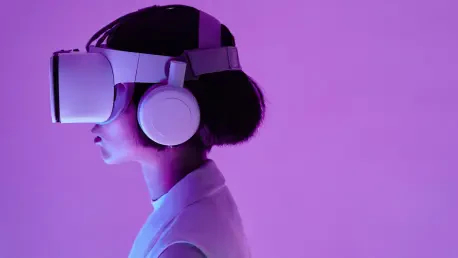
Imagine a dynamic environment where students engage with three-dimensional simulations, manipulating digital models in real-time and experiencing concepts through immersive virtual reality. Such a creative approach not only deepens understanding but also sparks creativity, allowing learners to explore complex scientific principles and innovative technologies in a highly engaging and tangible way. Augmented reality (AR) is the catalyst for this transformation, moving education from passive observation to active, immersive creation.
Integrating AR into a STEM lab is more than a technological upgrade. It represents a fundamental pedagogical shift. It provides a bridge between abstract concepts and tangible understanding, allowing students to manipulate complex systems that were once confined to textbooks. This article explores a strategic framework for integrating AR into the STEM curriculum to deepen engagement and measurably improve learning outcomes.
From Static to Interactive: The AR Advantage
While virtual reality (VR) transports a user to an entirely simulated world, AR overlays digital information and 3D models onto the real environment. For the STEM lab, this distinction is critical. AR enhances, rather than replaces, the physical learning space. It allows students to hold a beating human heart in their hands, deconstruct a jet engine on their desk, or visualize molecular bonds forming right before their eyes.
This approach drives concrete educational benefits:
Improved Conceptual Understanding: Abstract ideas become concrete. A recent analysis suggests that immersive learning technologies can boost student understanding of complex STEM topics by making invisible processes visible.
Increased Engagement: Interactive, three-dimensional content is inherently more engaging than a flat image or text. When students can manipulate a virtual object, their curiosity and motivation to explore its properties increase significantly.
Enhanced Spatial Reasoning: AR directly trains students to think and visualize in three dimensions, a critical skill in engineering, architecture, and medicine that traditional teaching methods often struggle to develop.
A Strategic Framework for AR Integration
Successfully embedding AR into a STEM lab requires more than just purchasing hardware. It demands a deliberate pedagogical strategy focused on clear goals, robust training, and meaningful assessment.
Define Clear Learning Objectives
Technology should always serve the curriculum, not the other way around. Before introducing an AR tool, educators must define what specific learning outcome it will support. The goal is not simply to use AR; it is to use AR to teach a concept more effectively.
For example, if the objective is for students to calculate moments (Moment = Force x Distance), an AR project could challenge them to design and test a virtual catapult. While students have the freedom to design the object, the core, non-negotiable goal is to apply the physics formula to achieve a desired result.
Build Competence Through Training
Students cannot engage with a tool they do not understand. Effective training is the foundation for success. This involves more than just a technical walkthrough; it includes setting clear expectations for collaboration, experimentation, and responsible use of the technology. When students feel competent with the tools, they are free to focus on the academic challenge, leading to deeper engagement and less frustration.
Foster Autonomy and Responsibility
Project-based work in an AR environment cultivates skills beyond the core STEM curriculum. It demands collaboration, critical thinking, and self-direction. For students accustomed to more passive learning, this shift can be challenging. It’s wise to scaffold their autonomy, starting with smaller, structured AR tasks before moving to more open-ended, self-directed projects. This process also builds essential metacognitive skills, teaching students to self-assess their understanding and identify knowledge gaps.
Putting Theory into Practice: AR Across Disciplines
AR applications can be tailored to every pillar of STEM, often blending disciplines to solve a single problem. This interdisciplinary approach mirrors how challenges are addressed in the professional world.
Science
Instead of memorizing chemical formulas, students can build molecules. Tasked with constructing common compounds, they can virtually manipulate atoms and bonds, immediately seeing the results of their work. Does this molecule exist? What are its properties? This hands-on modeling makes concepts like covalent and ionic bonding intuitive.
Technology and Engineering
It is impossible to bring a modern train engine into the classroom. With AR, however, students can hold one in their hands. A powerful project could challenge teams to design the most fuel-efficient transportation method for a specific cargo and terrain. Using AR models of engines and vehicle components, they can analyze trade-offs between electric, diesel, and steam power, connecting theoretical engineering principles to practical application.
Mathematics
Fractals are a perfect example of a concept that is difficult to grasp in 2D. Holding a virtual, rotating fractal in their hands allows students to intuitively understand complex ideas like recursion, scale, and infinity. This can serve as a launchpad for projects that blend mathematics and art, where students design their own fractals based on specific mathematical rules.
Measuring What Matters in AR STEM Labs
Traditional tests are not sufficient to capture the skills developed in AR-enhanced STEM labs. Formative assessment should involve direct observation, real-time questioning, and guided feedback to ensure students are applying concepts correctly. Summative assessment should prioritize measurable learning outcomes over aesthetics, evaluating projects such as 3D models, simulations, or prototypes. Research indicates that immersive technologies like augmented reality improve comprehension, retention, and engagement, making complex STEM topics more tangible and easier to understand. Schools using AR have reported up to a 20–25% increase in concept retention and higher participation in collaborative problem-solving activities.
Conclusion
Integrating AR into STEM programs shifts learning from passive observation to interactive, hands-on exploration. When assessment strategies are aligned with these immersive experiences, educators can accurately gauge understanding, improve engagement, and develop critical thinking, spatial reasoning, and problem-solving skills. Thoughtful implementation of AR equips students with competencies essential for future careers in science, engineering, and technology, while making learning more accessible, engaging, and relevant. Schools embracing AR create a dynamic environment where curiosity leads to innovation and students are prepared for real-world challenges in a technology-driven society.