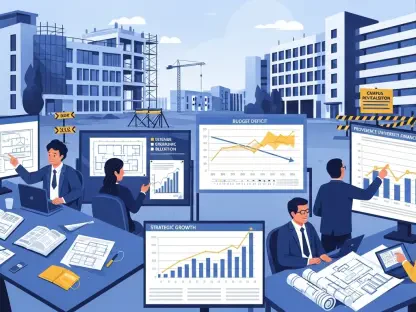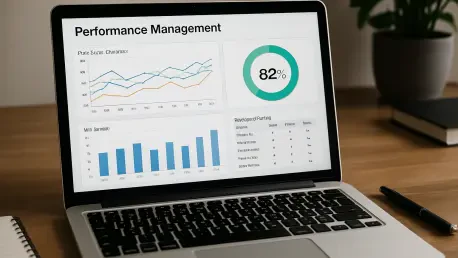

The traditional, once-a-year performance review has become a relic of a bygone corporate era, fundamentally unsuited for the dynamic and dispersed nature of the modern workforce. In its place, a new paradigm has emerged where performance management is no longer a retrospective administrative chore but a continuous, forward-looking strategic function essential for organizational health and growth. This evolution is not a fleeting trend but a direct response to the institutionalization of hybrid work, an intensely competitive talent market, and the sophisticated maturation of artificial intelligence. Today’s leading software platforms are designed to address these challenges head-on, functioning less as oversight tools and more as integrated systems for fostering employee development, enhancing engagement, and driving measurable business outcomes through a more human-centric approach to performance.
The New Standard of Core Capabilities
The most effective performance management software is characterized by a deeply integrated and holistic philosophy, moving far beyond simple tracking to become an intrinsic part of an employee’s daily workflow. The core of this modern approach is the principle of continuous feedback, which effectively renders the annual review obsolete. Leading platforms facilitate this through a suite of features including real-time check-ins, structured agendas for 1-on-1 meetings, and comprehensive 360-degree feedback mechanisms that gather input from peers, direct reports, and managers. This constant flow of information is coupled with sophisticated goal-tracking systems, predominantly using the Objectives and Key Results (OKR) framework. These tools enable the seamless cascading of high-level company objectives down to individual contributors, ensuring that daily tasks and projects are directly and transparently aligned with overarching business priorities, fostering a sense of shared purpose and direction across the organization.
Beyond establishing a cadence for feedback and goals, top-tier platforms are distinguished by their ability to merge performance data with employee engagement metrics, providing a comprehensive view of workforce health. There is a clear convergence between these two domains, with leading software integrating pulse surveys and detailed engagement analytics directly alongside performance information. This allows leadership to draw clear lines between specific management practices and their direct impact on employee morale, motivation, and retention. Powering these insights is a layer of advanced analytics and artificial intelligence that has become a standard feature. AI is increasingly leveraged to identify and mitigate unconscious bias in written feedback, provide managers with personalized coaching suggestions, and deliver predictive analytics that can proactively flag potential flight risks, allowing for timely intervention and more strategic talent management.
A Breakdown of Market Leaders
The current market is led by a category of specialists focused intently on continuous performance and engagement, building their platforms around the philosophy of cultural transformation. Solutions such as Lattice and 15Five are widely regarded as best-of-breed tools in this space, offering highly intuitive user interfaces combined with robust feature sets for managing OKRs, facilitating meaningful 1-on-1s, and capturing real-time sentiment through pulse surveys. These platforms are exceptionally well-suited for mid-market to enterprise companies that are prioritizing the development of a strong, feedback-driven culture. Other prominent players in this category include Leapsome, which distinguishes itself by integrating performance management with learning and development modules, and Culture Amp, which leverages its deep roots in employee experience analytics to provide a data-rich foundation for its performance tools, offering a uniquely powerful perspective on the intersection of engagement and productivity.
For organizations seeking a more unified solution, a significant portion of the market consists of comprehensive Human Resource Information Systems (HRIS) that feature strong, fully integrated performance management modules. BambooHR stands out as a leader for small and medium-sized businesses, delivering a user-friendly, all-in-one platform that simplifies HR processes. For rapidly scaling global companies navigating the complexities of a hybrid workforce, HiBob provides a modern, dynamic system designed for engagement and cultural cohesion. At the enterprise level, established titans like Workday and SAP SuccessFactors offer incredibly robust and scalable performance management capabilities that are deeply embedded within their broader human capital management (HCM) suites, providing a single source of truth for all talent data, albeit often with greater complexity and cost. A newer entrant, Rippling, is also making waves by unifying HR, IT, and finance with an emerging performance module for tech-forward businesses.
Specialized and Budget-Friendly Options
Recognizing that a one-size-fits-all approach is insufficient, several platforms have carved out a niche by focusing intensely on a specific aspect of performance management. For organizations committed to a rigorous strategy of goal alignment, Betterworks and Profit.co have established themselves as powerhouses in the OKR space. They provide sophisticated tools for cascading objectives throughout the enterprise and tracking progress in real time. In a different vein, PerformYard appeals to teams seeking a highly customizable yet streamlined solution for reviews and feedback, offering a powerful alternative to manual spreadsheet-based processes. Another unique specialist, Deel, integrates performance management tools directly into its core global payroll and compliance platform. This novel approach makes it an ideal choice for globally distributed companies that need to manage performance, compensation, and compliance for international teams within a single, unified system.
The need for effective performance management is not limited to large enterprises with substantial budgets. A growing number of platforms are designed specifically to meet the needs of startups and small to medium-sized businesses, offering powerful features at an accessible price point. Synergita is a notable example, providing customizable SMART goal tracking and automated review cycles for a remarkably low per-user cost. Similarly, Factorial offers an intuitive and affordable all-in-one HR solution with a strong performance module, gaining particular traction in the European SMB market. For those who prioritize simplicity and meaningful interactions above an exhaustive feature list, Small Improvements delivers a clean, focused experience designed to encourage quality feedback and development conversations without overwhelming users, proving that effective performance management can be both straightforward and cost-effective.
The Strategic Selection Process
The final decision in selecting a performance management platform was guided by a careful analysis of prevailing market trends and a clear understanding of the organization’s unique requirements. The definitive shift from episodic annual reviews to a model of continuous, ongoing dialogue was a primary consideration, as was the increasing role of artificial intelligence as a supportive co-pilot for managers, helping to augment human judgment and reduce administrative burdens. The platform chosen needed to provide robust, data-driven analytics to inform a proactive talent strategy, particularly for succession planning and retention efforts. Moreover, with a distributed workforce, the software had to be designed from the ground up to support hybrid and remote teams, ensuring alignment and connection regardless of an employee’s physical location. Company size, primary objectives, budgetary constraints, and the need for seamless integrations with existing HR and communication systems were all weighed, and extensive use of product demos ensured that the final choice was not only feature-rich but also highly usable for both managers and employees, which ultimately determined its potential for successful adoption.